Plumbing Problems That Disrupt Daily Routines
Residential Plumbing in Shreveport for leaking pipes, fixture failures, clogged drains, and water heater problems that affect kitchens and bathrooms
The Parish Plumber handles residential plumbing for homeowners in Shreveport, covering everything from dripping fixtures and blocked drains to water heater failures and full plumbing installations. Plumbing problems rarely announce themselves at convenient times—a slow drain becomes a backed-up sink, a small leak becomes visible ceiling staining, and a water heater that runs lukewarm eventually stops producing hot water altogether. Accurate diagnosis before any repair begins is what separates a lasting fix from a repeated service call.
Residential plumbing covers a wide range of interconnected systems, and identifying the actual source of a problem often requires more than checking the obvious point of failure. A drain that clogs repeatedly at the same fixture may signal a partial obstruction further down the line rather than a surface-level blockage. Similarly, inconsistent water pressure throughout a home can point to supply line issues, fixture valve problems, or municipal pressure fluctuation—each requiring a different repair approach. Shreveport's aging housing stock means older galvanized or cast-iron pipe sections are still present in many homes, and those materials behave differently under diagnosis than modern PVC or copper installations.
Request a service appointment to have a specific plumbing concern evaluated at your property.
What Proper Residential Plumbing Diagnosis Requires
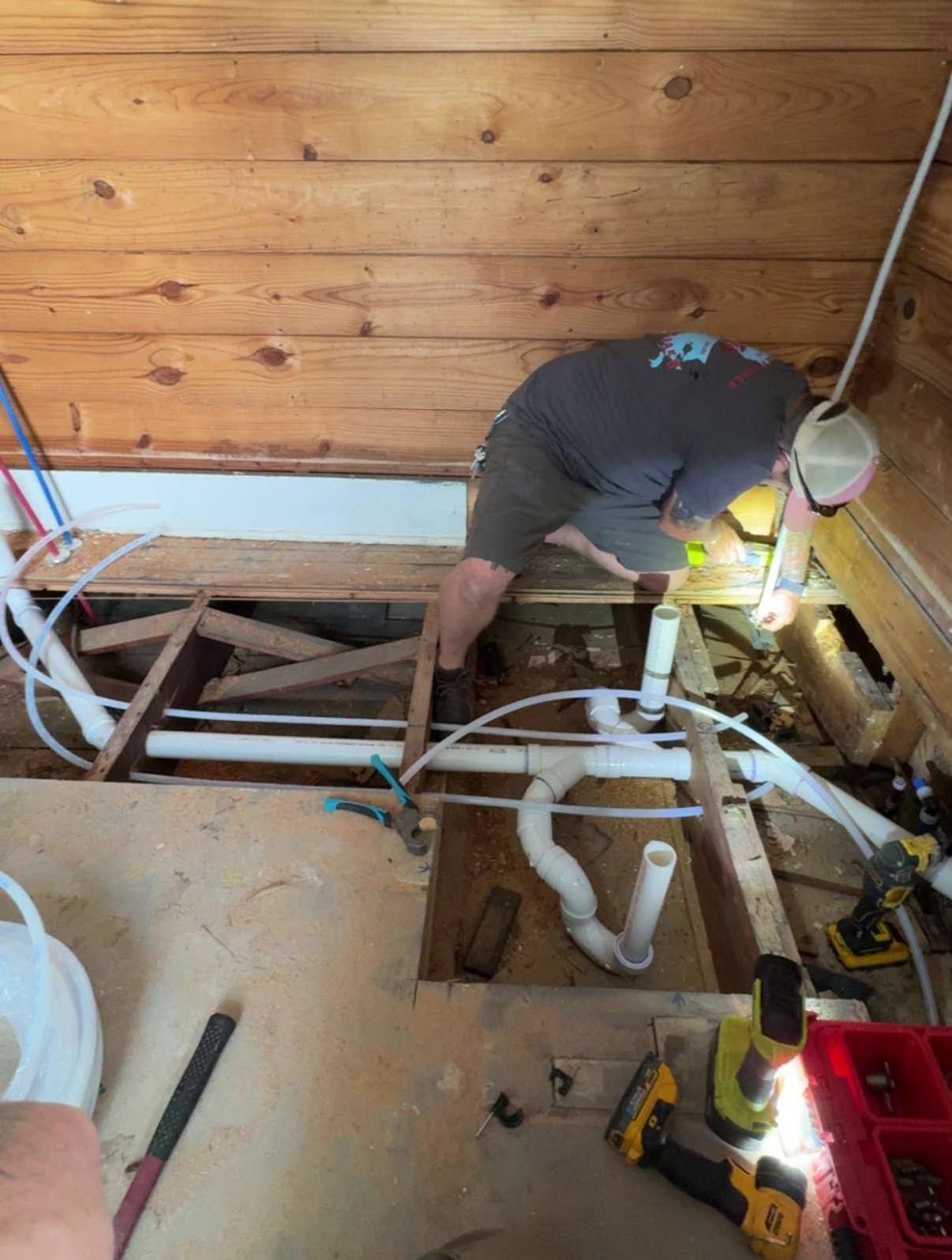
Effective residential plumbing work begins with tracing the problem to its actual origin rather than addressing only what is visible at the surface. When a pipe leaks behind a wall, the access point for repair depends on the pipe material, the location within the wall cavity, and how far moisture has already traveled. When a water heater underperforms, the decision between flushing sediment buildup, replacing heating elements, or recommending a full unit replacement depends on the age of the system, the severity of the problem, and whether the tank itself has been compromised. Each of those decisions affects cost, longevity, and how long the repair holds.
After service is completed, homeowners typically notice the change immediately in daily function—drains that clear at normal speed, fixtures that hold proper water pressure without dripping, and hot water that reaches temperature consistently. Those are the observable indicators that a repair addressed the actual problem rather than a symptom of it. Repairs that only address surface symptoms tend to recur within weeks under normal household use.
One practical advantage of working with a single provider across varied household plumbing needs is continuity—a plumber who has already assessed your water heater configuration or main drain layout can apply that context to the next problem that surfaces. Some residential plumbing needs, such as fixture replacements or new installations, also require coordination between supply shutoffs, drain configurations, and existing pipe sizes, which affects which replacement units or fixtures are compatible with a given installation.
Common Questions About Residential Plumbing
Homeowners in Shreveport often have questions before scheduling plumbing service, particularly when a problem has been present for a while or involves a system they are unfamiliar with.
What are the signs that a plumbing problem needs professional attention rather than a temporary fix?
Repeated clogs at the same drain, water staining on ceilings or walls, and fixtures that lose pressure without explanation are indicators that the underlying cause has not been addressed and warrants a diagnostic evaluation.
How does a plumber locate a leak that is not visibly dripping?
Moisture detection involves checking surrounding drywall and flooring for soft spots or discoloration, tracing supply line runs, and in some cases using pressure testing to isolate which section of pipe is losing water.
When does a water heater repair make more sense than replacement?
Units that are less than eight to ten years old with isolated component failures—such as a thermostat or heating element—are typically candidates for repair, while older units with tank corrosion or recurring performance issues are more practical to replace.
Why do drains in older Shreveport homes tend to clog more frequently than in newer construction?
Cast-iron drain lines common in homes built before the 1980s develop interior scaling over time that narrows the pipe diameter, making clogs more likely and more persistent than in smooth-walled PVC systems.
What should I do if I notice water pooling near a fixture or under a sink before a plumber arrives?
Shut off the supply valve directly below or behind the affected fixture to stop active water flow, and avoid using that fixture until the source of the leak is identified and repaired.
The Parish Plumber is available to evaluate residential plumbing concerns across Shreveport—call (318) 990-9858 to describe your situation and arrange a service visit based on what you are currently experiencing at your property.